Physical Address
304 North Cardinal St.
Dorchester Center, MA 02124
Physical Address
304 North Cardinal St.
Dorchester Center, MA 02124

European Capital of Culture 2027
European Capital of Culture 2027
Before 2027 becomes an event, it is worth understanding what Liepāja already is. The European Capital of Culture designation does not create cultural life in a city. It amplifies what is already there. In Liepāja’s case, there is more to amplify than most people outside Latvia realise.
This is not a tourist inventory. It is an account of what the city brings to a year-long cultural programme — the infrastructure, the identity, the contradictions that make (un)rest a credible concept rather than a branding exercise.
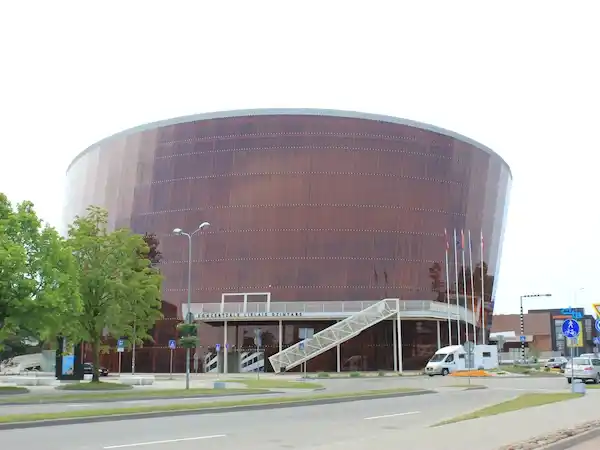
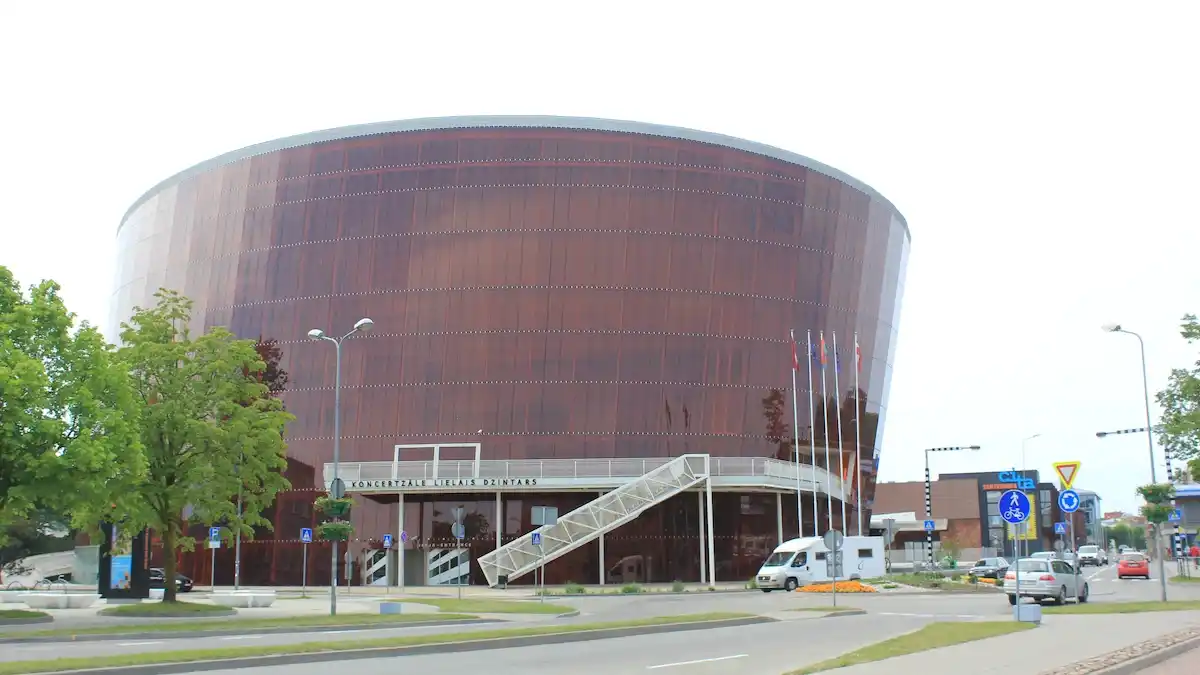
The Great Amber Concert Hall (Lielais Dzintars) is the architectural centrepiece of modern Liepāja. Opened in 2015 and designed by Austrian architect Volker Giencke, it sits on the city’s Trade Canal and is the primary venue for the 2027 programme. Its acoustics are the reason performers come from outside Latvia to record here. It is also the home of the Liepāja Symphony Orchestra.
The orchestra was founded in 1881. That makes it the oldest symphony orchestra in the Baltic States — predating Latvian independence by nearly forty years. It has performed continuously since then, through Russian empire, German occupation, Soviet rule, and independence. The continuity of that institution through the twentieth century says something about the city that no programme document captures.
The opening event of the 2027 programme — Sun & Sea, the Lithuanian opera that won the Golden Lion at the 2019 Venice Biennale — is staged at the Great Amber Concert Hall in April 2027. It is not a coincidence that Liepāja is where it makes its Latvian debut.
The Liepāja Theatre is the oldest professional Latvian theatre still in operation, established in 1907. It predates the Latvian state by more than a decade and has been producing work continuously since. It also housed the Liepāja Opera for part of its history — which is why the city’s relationship to opera feels more natural than it might otherwise.
The Holy Trinity Cathedral contains what is documented as the world’s largest unmodified mechanical organ — more than 7,000 pipes, built in the late nineteenth century and never substantially altered. For anyone with an interest in organ music, this alone is a reason to visit. For everyone else, it is context: Liepāja has been accumulating cultural infrastructure for over a hundred years.
Liepāja’s reputation as Latvia’s rock capital is not marketing. It grew from the Soviet era, when the city’s geographical position and the closed Karosta military zone created conditions where musicians had slightly more operational freedom than in Riga. The bands that emerged from Liepāja in the 1980s — and the venues and festivals that followed — shaped Latvian popular music in ways that are still felt.
Summer Sound festival, held annually on the city’s beach, regularly draws international headliners and audiences of over 20,000. The Liepāja International Piano Competition is a serious event on the classical circuit. The city supports both ends of the musical spectrum without the friction you might expect.
The rock heritage feeds directly into the (un)rest programme’s Port Paradox strand, which asks how a city holds contradictions — military and musical, Soviet and free, heavy industry and live performance — without resolving them into something tidier than the truth.
The Liepāja Museum on Kūrmājas Prospekt is where the ElektrON – The Future of Amber exhibition opens on 8 January 2027, marking the start of the ECoC year. The museum covers the city’s art and history — which in Liepāja means the German-Baltic heritage (the city was Libau), the Soviet period, and the decades since independence.
RTU Liepāja Academy houses the MPLab (Art Research Laboratory), which is already functioning as a venue for symposia and events in the run-up to 2027. It represents something the ECoC programme is trying to build on: a working connection between art, research, and education in a city that is not a capital.
The (un)rest land extends beyond the city. The Kuldīga Region to the north holds two UNESCO World Heritage Sites: the Old Town of Kuldīga itself, and the Suiti Cultural Space in Alsunga — a living tradition of music and costume that has been on UNESCO’s Intangible Cultural Heritage list since 2009. The South Kurzeme Region is the largest in Latvia by area, with a Baltic coastline that has been producing amber traded across Europe since antiquity.
These are not additions bolted on to pad out a bid. They are territories with their own cultural depth that the programme is treating as a landscape rather than a backdrop.
What 2027 brings is not the culture itself. It is access, investment, and international attention. Events that might have run for a local audience will reach visitors from across Europe. Artists from Latvia, Lithuania, Germany, Norway, Hong Kong, and Canada are already working here. The programme is built on what exists. That is why it has a reasonable chance of lasting.
The (un)rest programme runs from April to December 2027 across Liepāja, South Kurzeme, and Kuldīga. Many events are free. Liepāja is three hours from Riga by road or bus. For accommodation, getting around, and a full visitor guide to the city, liepajaguide.com covers everything you need.
Sources: Liepāja 2027 Programme Vision · Official site — liepaja2027.lv · liepajaguide.com
Picture: Great Amber Concert Hall — Andrzej Otebski, CC BY-SA 4.0 via Wikimedia Commons.